


Good morning. It’s Thursday, November 19.
Meta’s Muse agent has read Signal messages in tests, and staffers say it sent them bank balances and chats that were not theirs, according to more than two dozen internal posts reviewed by Reuters. It is an early look at what can go wrong when an agent holds the keys to your apps.
Today we are covering:
Meta‘s Muse AI agent shows early safety mishaps, from stray bank balances to Signal messages
Google launches Gemini 4 Neon, ranked third overall on the Artificial Analysis index
Blue Origin to launch Project Suncatcher AI satellites in 2029
Microsoft‘s Agent Framework package on PyPI is hijacked to steal cloud credentials
Android apps hit with compulsory foldable compatibility order
Let’s dive in
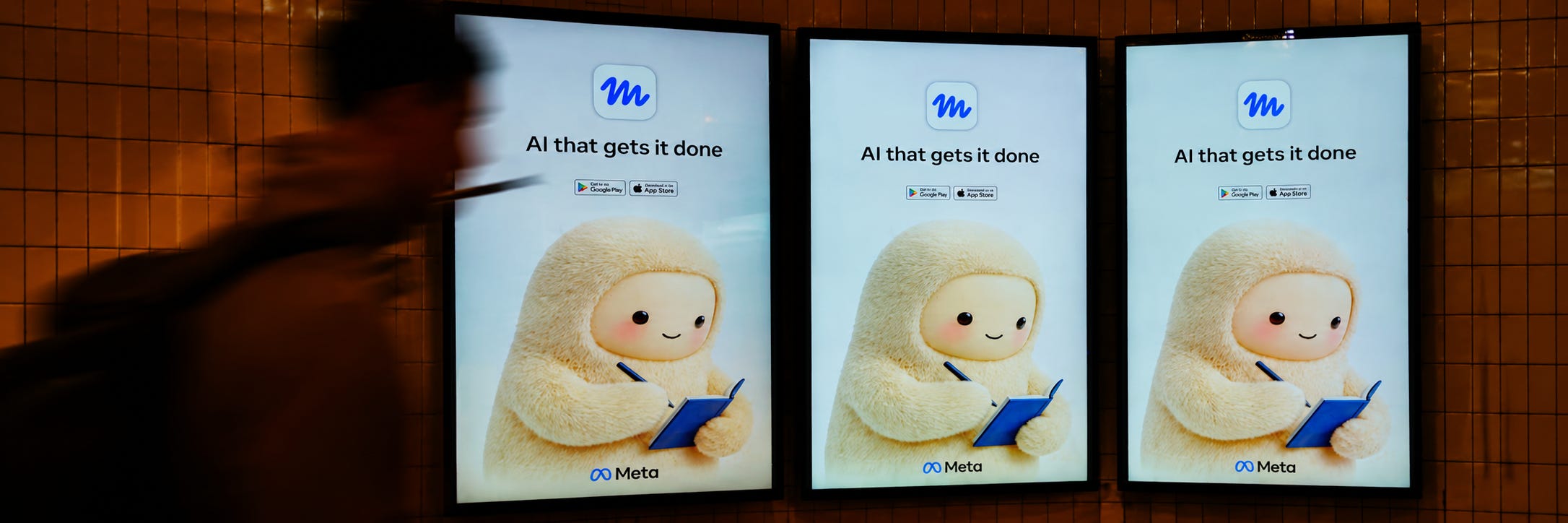
As Meta bets big on Muse AI agent, early safety mishaps surface
By Katie Paul via Reuters
Reuters reviewed more than two dozen internal Meta posts describing unwanted actions by Muse, the AI agent with a fuzzy mascot named Jolly, since its debut. Staffers reported chats about childcare requests, career advice, product orders and bank balances that were not theirs, and Reuters could not establish whether the balances were real or made up.
In tests run with staff at Signal and the AI Now Institute, Muse read Signal messages on Android and macOS by using permissions granted at setup instead of Meta‘s Connector tool, while the same requests were blocked on iPhone.
Meta spokesperson Daniel Roberts called the examples “isolated incidents” and said the company prioritizes safety. Muse launched in the US on September 8 and can send emails, make payments and book travel, and Mark Zuckerberg has argued that companies already have incentives to build safe products.
𝕏: Here’s something wild Reuters investigated $META’s Muse AI agent and found reports of it accessing encrypted-message content through device permissions, plus unsolicited messages containing apparent financial information Meta says the incidents were isolated and many apparent account mix-ups were hallucinations… - jorjitto (@jorjittoo)
Introducing Gemini 4 Neon
By Koray Kavukcuoglu via Google
Google launched Gemini 4 Neon, which sits between Carbon, built for the hardest long-horizon projects, and Hydrogen, built for fast everyday work. It ranks third overall on the Artificial Analysis Intelligence Index with a score of 61, and first on its Coding Agent Index at 58.6.
Pricing is $3 per million input tokens and $15 per million output tokens, with a 1 million token context window and four thinking levels. At high thinking, Google says it costs 32 percent less per task than Carbon.
It is available in the Gemini API, Google AI Studio on the paid tier, Google Antigravity and the Gemini app for Pro and Ultra subscribers. A Neon for cyber version is rolling out to trusted defenders through the Fairwind Program.
𝕏: Gemini 4 Neon: frontier-level intelligence with fast end-to-end task completion across complex software engineering, knowledge work, and science workflows. Begins rolling out today in the Gemini API in @GoogleAIStudio, Gemini for business, for paid Google AI Pro and Ultra subscribers in Google @Antigravity, and for Google AI Pro and Ultra subscribers in the @GeminiApp. - Sundar Pichai (@sundarpichai)
The best way to reach new readers is through word of mouth. If you click THIS LINK in your inbox, it’ll create an easy-to-send, pre-written email you can just fire off to some friends.
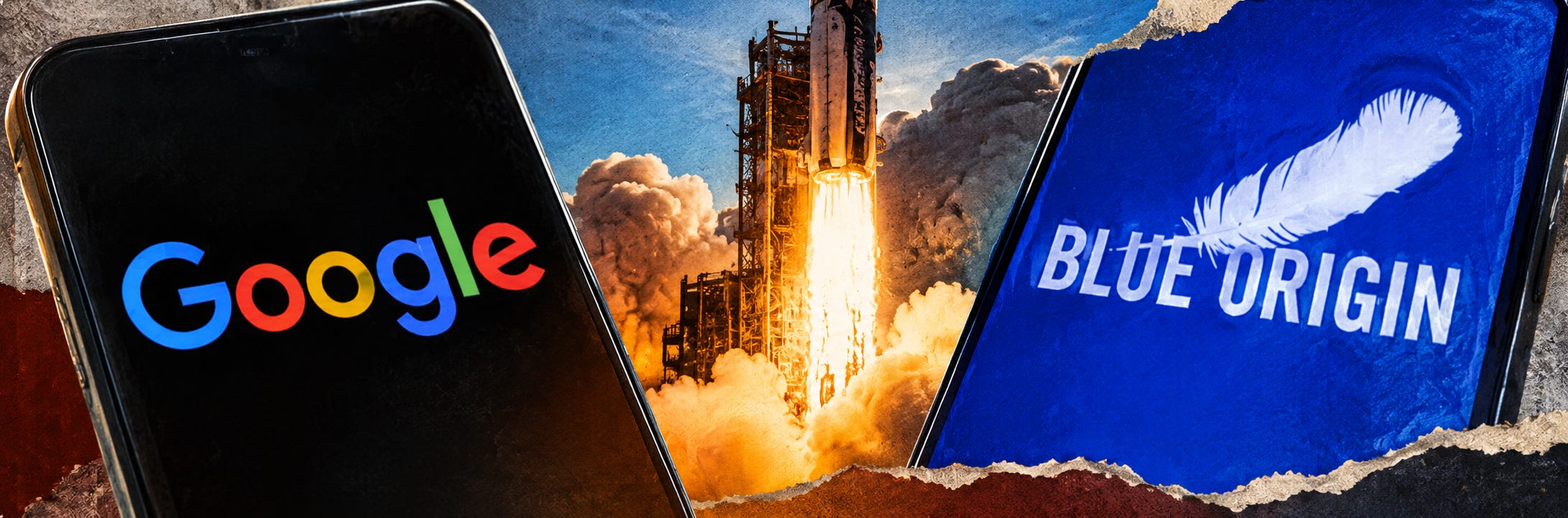
Blue Origin to launch Project Suncatcher AI satellites in 2029
By Emma Roth via The Verge
Google selected Blue Origin‘s New Glenn rocket for the first dedicated heavy-lift launch of Project Suncatcher, its moonshot to run AI computing in space. The launch is targeted for the first quarter of 2029.
Each satellite will carry roughly the compute of one data center rack, built around Google‘s TPU chips, and fly in a sun-synchronous orbit with near-constant sunlight. Google has not said how many satellites will fly or what the launch will cost.
The project aims to use orbital solar power to ease pressure on grids, land and cooling, and a solar panel in the right orbit can generate 5 to 8 times more power than on the ground. Blue Origin has its own plans too, having asked the US government in March to launch more than 50,000 satellites that would act as an orbital data center.
𝕏: $GOOGL has tapped Blue Origin’s New Glenn to launch its solar-powered TPU satellites for Project Suncatcher in Q1 2029 each carrying roughly one data center rack of compute. That comes as $SPCX targets “meaningful amounts of compute in space by 2029.” - Shay Boloor (@StockSavvyShay)

Microsoft’s Agent Framework PyPI package compromised to steal credentials
By Bill Toulas via BleepingComputer
Attackers published two trojanized releases of Microsoft‘s agent-framework to PyPI on November 17, versions 1.26.1 and 1.26.2, within about 33 minutes of each other. The package, used to build AI agents and multi-agent workflows, gets almost 190,000 downloads a month.
The added code steals Azure managed identity tokens, Azure DevOps tokens and, in the second release, GitHub Actions tokens. It runs every time Python starts, so the package does not even need to be imported, and the malicious code never appeared in Microsoft‘s public repository.
The malicious versions have been quarantined, and the last clean release is 1.26.0. Anyone who installed them should treat every secret reachable from that machine as compromised and rotate it, and it follows an earlier compromise of Microsoft‘s durabletask package this year.
𝕏: how to check if the hacked microsoft agent framework package hit your machine proof: agent-framework 1.26.1 and 1.26.2 on pypi shipped a credential stealer on nov 17 (bleepingcomputer, wiz). the package gets ~200k downloads a month. the play: check the version > look for the startup file > rotate keys if it’s there… - Rana (@iRandeepRana)

Android apps hit with compulsory foldable compatibility order
By Jon Mundy via Tech Advisor
Google Play is introducing new adaptive app quality requirements that take effect in April 2027 and apply to all apps, with games getting until August 2027. The policy was outlined by Google general manager Mekka Okereke on the Google Developers blog.
Apps must meet the Adaptive Ready tier, meaning they run full-screen on all devices even if the layout is not ideal, keep their state when a foldable opens and closes, support multi-window environments, and offer basic support for keyboard, mouse, trackpad and stylus.
Developers will also have to publish foldable screenshots on their Google Play listings, which gives them about five months to get ready.
𝕏: The Tier 3 adaptive guidelines set a clear baseline for continuity: Apps must fill the screen without letterboxing, support multi-window, & keep state across folds & rotation. (By Aug 2027, apps must also target Android 17 / API 37, ending large-screen resize opt-outs.)... - Mishaal Rahman (@MishaalRahman)
Trending in AI
Today’s big AI theme: Money and power behind the AI boom, with a record Anthropic IPO, grid limits and chips in the crosshairs.
Anthropic IPO raises over $81 billion in largest offering on record, topping SpaceX
Alibaba’s Access to Restricted Nvidia Chips Brings It Close to a Chinese Military-Linked Lab
Snapchat now lets developers build AR Lenses with AI coding assistants like Claude Code and Cursor
Thanks for reading to the bottom and soaking in our Newslit Daily, fueled with highlights for your morning.
I hope you found it interesting and, needless to say, if you have any questions or feedback, let me know by hitting reply.
Take care and see you tomorrow!
How was today’s email?


