


Good morning. It’s Wednesday, November 25.
Heads up: because of Thanksgiving Day and the holiday weekend, there won’t be a Newslit Daily on Thursday or Friday. We’ll be back on Monday.
A Brooklyn jury has convicted Huawei on 10 of 12 counts, including conspiracy to steal trade secrets and bank fraud, closing out a case that took nearly eight years. The one charge it beat, racketeering, was the most serious, which is why both sides are claiming something from the verdict.
Today we are covering:
Huawei convicted on 10 of 12 counts, including trade secret conspiracy and bank fraud
Treasury CIO Sam Corcos vibe-coded a Civilization clone while FinCEN dealt with a hack
Amazon and Meta discuss ending the blockade on Meta’s Muse shopping agent
Anthropic lets Claude users turn artifacts into Mac and Windows apps
Asia data centers pitch US clients to replace China demand after new chip rules
Let’s dive in
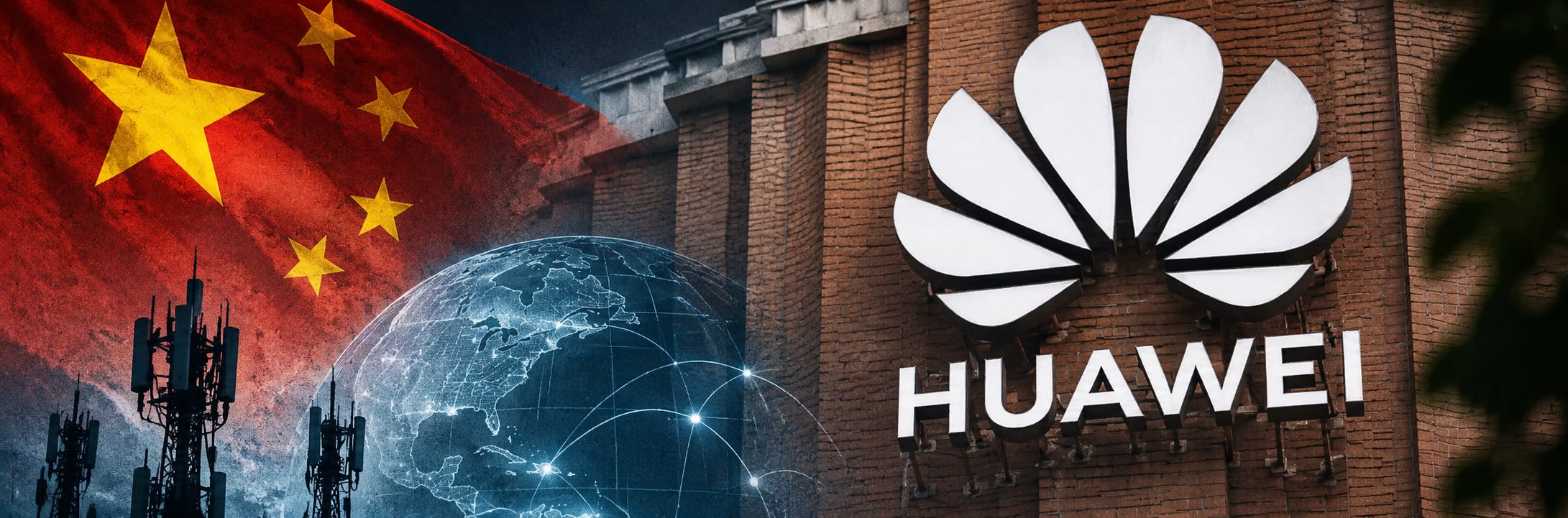
Huawei convicted of money laundering, conspiracy to steal trade secrets, and fraud by US jury; FBI says Chinese tech giant built its success on deception and theft
By Jowi Morales via Tom’s Hardware
A federal jury in Brooklyn convicted Huawei and three subsidiaries, Huawei Device, Futurewei and Huawei Device USA, on 10 of 12 counts, including conspiracy to steal trade secrets, bank fraud, wire fraud and money laundering. The verdict closes a case that lasted almost eight years.
Jurors acquitted the company of racketeering conspiracy, the most serious charge, and Huawei said it welcomed that part of the verdict. Prosecutors had portrayed the company as a 20-year criminal enterprise, while its lawyers argued the case stitched together isolated incidents.
The FBI said Huawei’s success was built on deception and theft. The conviction also covers violations of US sanctions law tied to Iran, and it is a rare criminal conviction of a foreign corporation in the US.
𝕏: Chinese Tech Giant Huawei and several of its subsidiaries have been CONVICTED… - Sanctions Violations - Fraud - Conspiracy to Steal Trade Secrets - Money Laundering “For decades the defendants conspired to secretly assist the Government of Iran, steal secrets from U.S. companies, lie to U.S. Banks and Congress and launder money.” - Catherine Herridge (@C__Herridge)

Treasury CIO Is Vibe Coding a ‘Civilization’ Clone During Treasury Department Hack
By Jason Koebler via 404 Media
FinCEN, the Treasury’s financial crimes unit, is investigating a cybersecurity incident that gave unauthorized access to a limited subset of its systems and took some offline, including a bank compliance reporting panel. The BSA E-Filing site is still running and deadlines were extended for affected filers.
During the incident, Treasury CIO Sam Corcos pushed updates to Legatum, a turn-based strategy game in the style of Civilization VI. It was built largely with Claude and OpenAI’s Codex, and commits included new music for the Aztec faction and chariot archers for Egypt.
Corcos, a former DOGE hire whose department oversees Treasury’s cybersecurity, has drawn scrutiny before. Politico reported that Scott Bessent removed him from AI policy work after unauthorized meetings with OpenAI and Anthropic, and Treasury did not respond to 404 Media’s request for comment.
𝕏: Update here: ARTEX, an AI-cyber tool that’s become a recent popular tool for hackers, is believed to have been used in the breach. ALSO: Hackers recently used ARTEX to assist in intrusion into DOD’s Cyber Defense Command, two people familiar with the matter say, though one of them added that the breach was low-impact. Unclear if intrusion coincided with this CIA and ODNI incident. - David DiMolfetta (@ddimolfetta)
The best way to reach new readers is through word of mouth. If you click THIS LINK in your inbox, it’ll create an easy-to-send, pre-written email you can just fire off to some friends.

Meta and Amazon discuss ending Muse shopping bot blockade, as ads, search emerge as key issues
By Sebastian Herrera via Fortune
Amazon and Meta are in talks on a deal that would connect Meta’s Muse AI agent to Amazon’s online store and end the blockade Amazon imposed in September. The main issues are how search results and advertising would be handled, and any agreement would need sign-off from both CEOs.
Amazon’s advertising business is worth $68.6 billion, nearly 10% of its yearly revenue, and Muse could bypass those ads. Meta says more than 10 million people in the US and Canada have set up Muse, and Mark Zuckerberg calls shopping its top use case.
Andy Jassy says Amazon has not ruled out letting outside agents in, but only with a “fair exchange of value.” Amazon’s own Alexa for shopping has been used by more than 400 million customers in the past year.
𝕏: Walmart and Muse are about to launch the first agent-to-agent agentic commerce integration. Muse will use Walmart’s MCP to get products, create carts and place orders, but it will talk to Walmart’s Sparky to get information on “orders, stores, policies and comparisons.” - Juozas Kaziukėnas (@juokaz)

Anthropic just gave Claude users a new way to make Mac apps
By Zac Hall via 9to5Mac
Anthropic is rolling out Install as app in beta for Claude on Mac and Windows, letting users turn artifacts, the custom tools they build in Claude, into personal desktop apps. Installed apps get their own icon and window and can be shared with others.
Apps must ask permission before interacting with the computer, and users choose how much access to allow. They can use Claude connectors, send notifications and add menu bar items.
It is the second builder-focused update this week, after the November 23 launch of a developer feature called Ship.
𝕏: Everyone is sharing this video. Very few people are explaining what it means for someone who doesn’t write code. So let me try. Until now, when you asked Claude to build something, you got an artifact. An artifact is a small working tool that Claude makes for you, like a calculator, a tracker, a dashboard, a simple game… - Malay Krishna (@Malay4Product)
Asia Data Centers Sound Out US Clients to Replace China Demand
By Newley Purnell via Bloomberg
Data center operators across Asia are pitching US clients to fill capacity once earmarked for Chinese customers, after new US export rules cut off a big source of demand.
The Commerce Department rule, effective November 19, requires licenses for advanced Nvidia chips shipped to Singapore, Malaysia, Thailand and Indonesia, and targets remote access by Chinese companies. US-headquartered buyers are largely exempt, and some operators are reportedly cutting rental prices for Nvidia’s newest chips.
The stakes are high in Malaysia, where JPMorgan estimates 3.8 GW of the data center pipeline is tied to Chinese operators. Banks including Citigroup and Standard Chartered have started reviewing their data center clients.
𝕏: I would expect B300 pricing to continue declining. A staggering number of neoclouds have approached us @liquidcompute looking to remarket long-term B300 capacity originally committed to Chinese-affiliated offtakers into the US and Western Europe due to concerns of stricter legislation regarding compute servicing to China. - Ronit Jain (@ronitrjain)
Trending in AI
Today’s big AI theme: AI’s reach keeps growing into politics, music and research, with a fight over Nvidia’s Washington ties, a streaming ban on fully AI-made songs, and a model credited with a historical discovery.
Thanks for reading to the bottom and soaking in our Newslit Daily, fueled with highlights for your morning.
I hope you found it interesting and, needless to say, if you have any questions or feedback, let me know by hitting reply.
Happy Thanksgiving to all! Take care and see you on Monday!
How was today’s email?


